
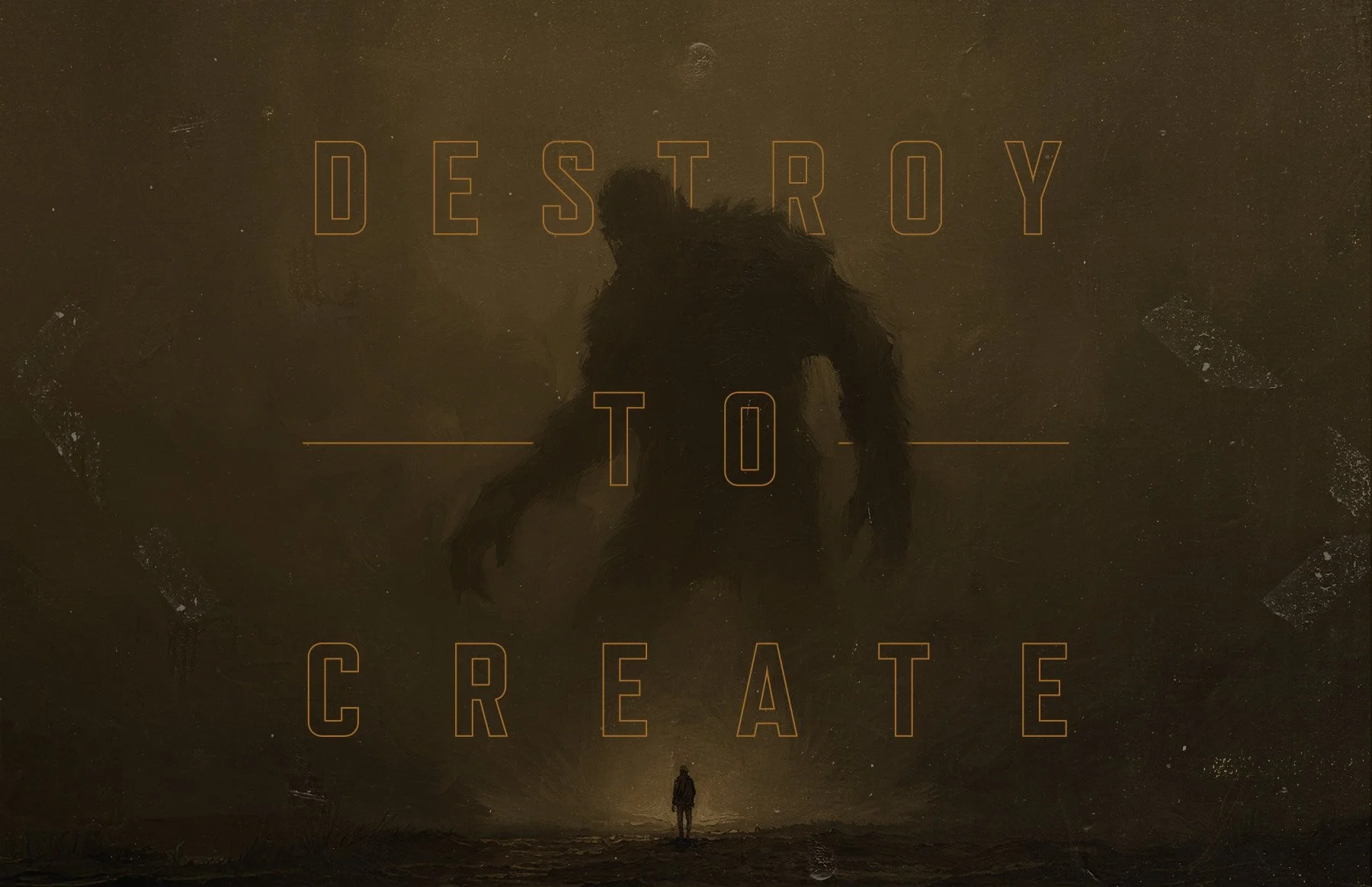
Creativity is often treated like a switch we can flip on command, especially in professional settings. There’s a deadline, a client, a brief, and expectations, so we’re supposed to “be creative” on cue. But creativity doesn’t work that way. In fact, one of the biggest obstacles to creative thinking is operating from a fear-based mindset.
Fear shows up in many subtle forms. It’s worrying about deadlines. It’s stressing over whether a client will like what you present. It’s the anxiety of offending someone, making the wrong choice, or not providing enough options. It’s the pressure to justify every decision before the idea has even had time to exist. When your mind is busy managing all of that, there’s very little space left for genuine creativity.
At its core, creativity requires openness. It needs mental freedom, curiosity, and a willingness to explore without immediately judging the outcome. Fear does the opposite. It narrows your thinking. When you’re afraid of getting something wrong, your brain defaults to what feels safe, familiar, or proven. You stop experimenting. You stop taking risks. You stop following ideas that don’t immediately make sense but might lead somewhere interesting.
This is why it’s so hard to do meaningful creative work when fear is driving the process.
That doesn’t mean deadlines or constraints are the enemy. They’re a reality of creative work, especially when you’re designing, writing, or building things for other people. The problem isn’t that those pressures exist, it’s allowing them to dominate your mental state while you’re creating. You can acknowledge the constraints without letting them dictate how you think.
One of the most important skills a creative person can develop is the ability to temporarily set that fear aside.
This doesn’t mean ignoring responsibility or pretending nothing matters. It means understanding that fear is not a productive tool for ideation. You can deal with deadlines later. You can edit later. You can refine, justify, and polish later. But in the early stages of creation, fear shuts down the very thing you’re trying to access.
Creativity works best when there’s a sense of play involved.
Playfulness doesn’t mean being unprofessional, it means being curious, relaxed, and open. It means allowing yourself to explore ideas without immediately asking, “Will this work?” or “Will they like this?” or “Is this safe?” Play creates psychological permission to try things that might fail, and that permission is essential. Most good ideas don’t start fully formed. They emerge through exploration, iteration, and sometimes through ideas that initially seem wrong.
Another important shift is learning not to take yourself too seriously during the creative process.
When everything feels heavy and every idea feels like a final statement about your talent or intelligence, fear takes over. But when you treat creativity as a process rather than a performance, it becomes easier to experiment. You’re no longer trying to prove something with every idea. You’re simply exploring.
Fun plays a bigger role here than we often admit.
When you’re in a fun, relaxed mental state, your brain naturally makes more connections. You’re more likely to see unexpected relationships between ideas. You’re more willing to follow a thought just to see where it goes. That’s how creative thinking works. A happy, curious mind is far more flexible than a stressed, self-protective one.
Ironically, some of the best professional work comes from moments where the pressure is mentally removed, even if only temporarily. When you give yourself permission to enjoy the process, the work often ends up stronger, clearer, and more original.
The real challenge, then, isn’t eliminating fear entirely. It’s learning how not to let it lead.
You can acknowledge the deadline, the client, and the expectations and then choose to put them in the background while you create. You can return to them later with a clearer, more confident idea. Creativity doesn’t thrive under constant scrutiny; it thrives when given room to breathe.
If you want better ideas, start by protecting your mental state. Create an environment internally and externally that allows curiosity, play, and experimentation to exist. Fear may always be present at the edges, but it doesn’t deserve the driver’s seat.